

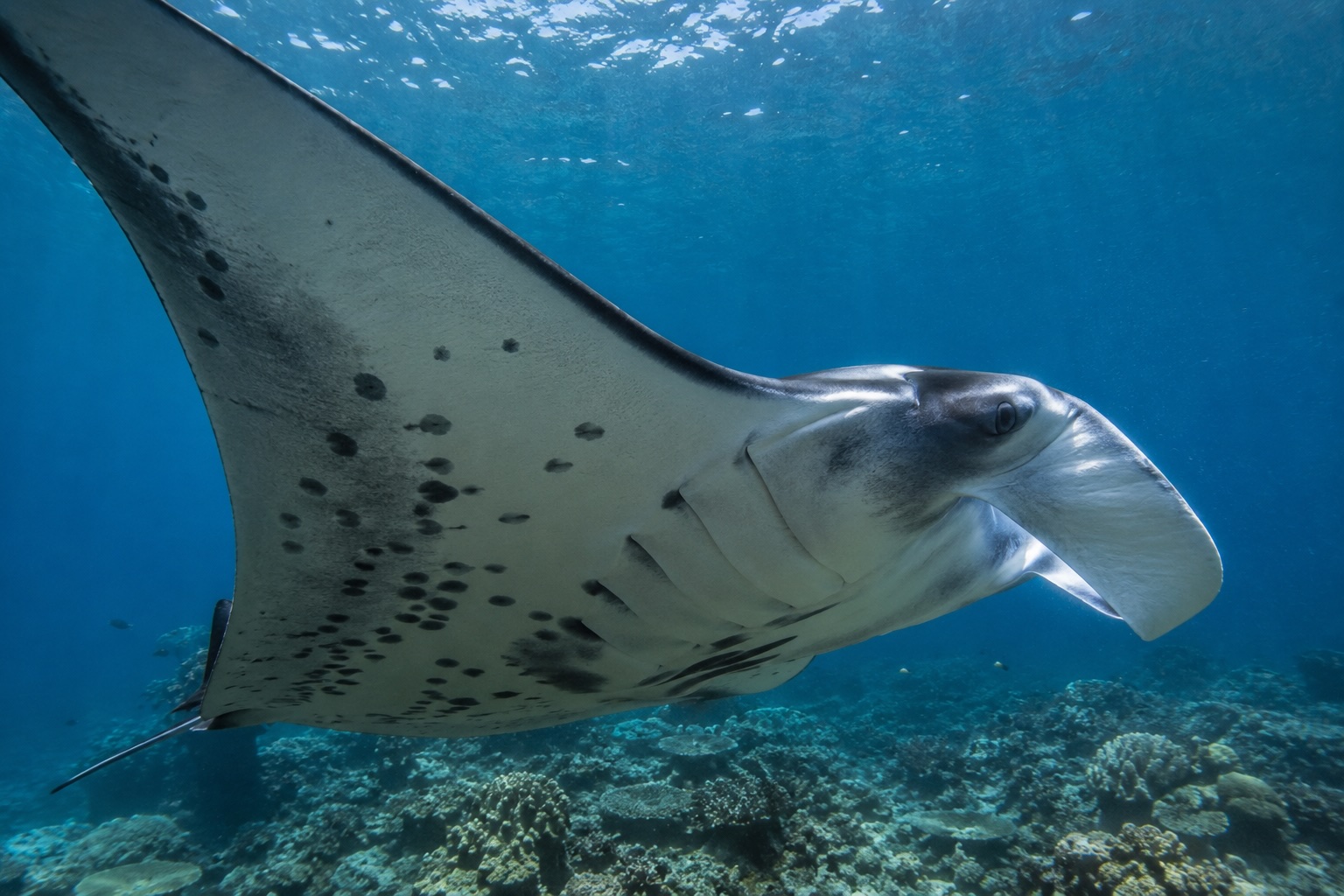
Manta rays are among the ocean’s most extraordinary creatures. With the largest brain-to-body ratio of any fish, they exhibit curiosity, social complexity, and behaviors that divers frequently describe as distinctly individual. Each animal can be identified by its unique spot pattern—a biological fingerprint that reveals personality and history.
Yet these remarkable animals are in crisis. Manta and devil ray populations are in global decline, squeezed by bycatch, targeted fishing, habitat degradation, and pollution. The biological reality compounds the problem: these animals reproduce slowly and cannot quickly rebound from losses.
International protections have grown stronger in recent years. All manta and devil ray species were uplifted to Appendix I under CITES—the highest level of trade protection available. Yet the gap between policy and practice remains wide. Inconsistent monitoring, uneven compliance, and limited enforcement resources mean that agreements forged in conference rooms do not always reach the open ocean.
This week, the Manta Trust launched Earth Raise 2026, a match-funding campaign running April 22–29 that doubles every public donation in support of manta and devil ray conservation. The timing is critical. Global aid cuts, shrinking grant pools, and rising operational costs are bearing down on the non-governmental organizations that carry much of the practical weight of conservation—conducting field research, advising on policy, and working directly with coastal communities to ease pressure on marine ecosystems.
“Global agreements are a vital step forward, but they are only effective if they are implemented,” said Dr. Guy Stevens, Chief Executive and Co-Founder of the Manta Trust. “That’s where organisations like ours play a crucial role—bridging the gap between policy and action, and ensuring these animals are protected in reality, not just in principle.”
Every action taken during Earth Raise has the power to create lasting change. By coming together, we can ensure these extraordinary animals—and the ecosystems they support—are protected for generations to come.

May brings warm, sunny days to the Greek Islands without the peak summer crowds. Discover why this month offers the ideal balance for ocean lovers and travelers.
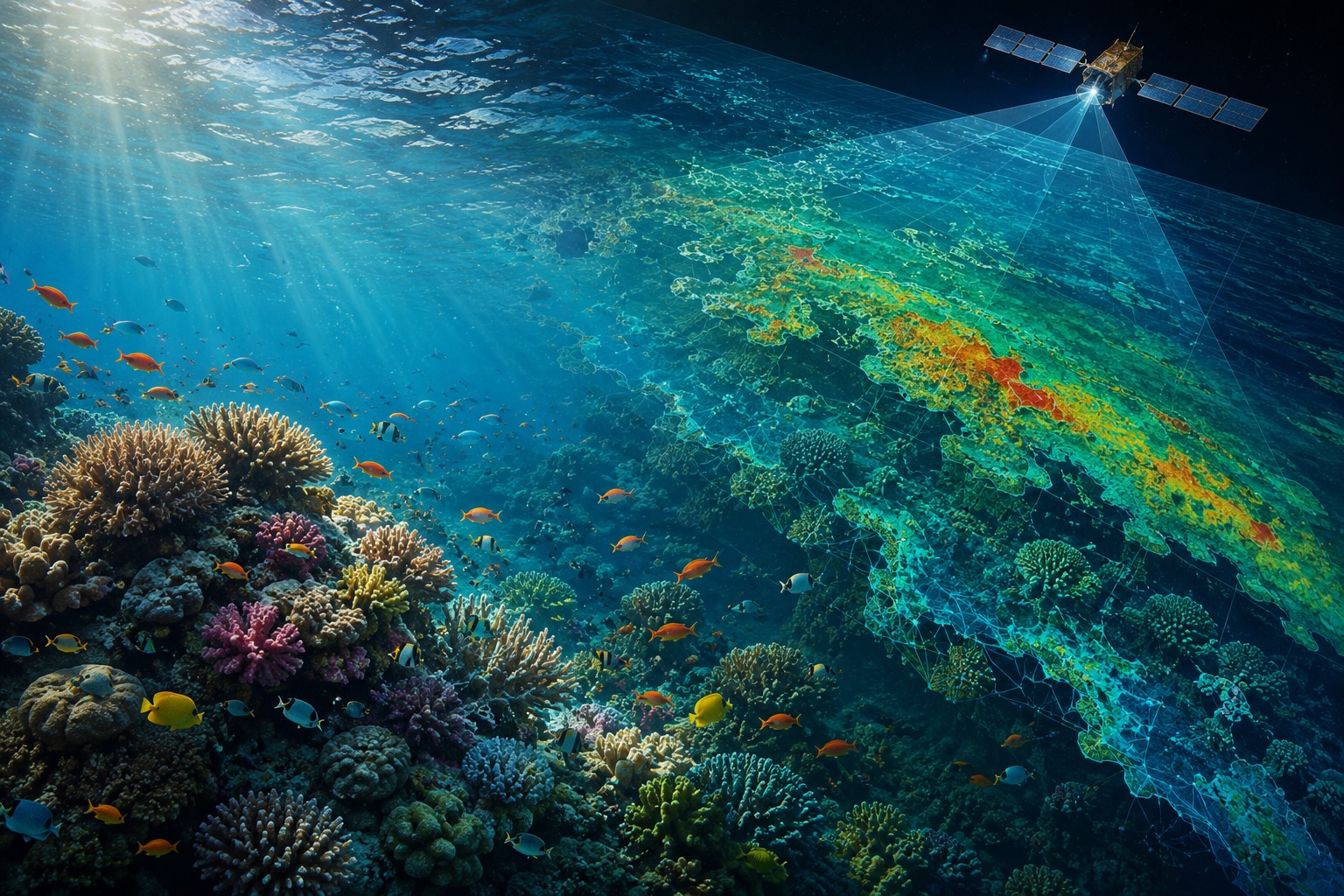
Cornell University researchers have developed an AI system that combines satellite data with underwater measurements to predict coral bleaching events earlier and more accurately.