


Lead: In a Halloween-ready twist, the Nippon Foundation–Nekton Ocean Census team has confirmed 30 previously unknown deep-sea species from one of Earth’s remotest regions—the Southern Ocean around Antarctica. The headline act: a carnivorous, hook-covered sponge (Chondrocladia sp. nov.) that flips the script on sponge behavior.
What Was Found—and Why It’s Unusual
Most sponges filter feed. This one traps prey with microscopic hooks, then digests it—an extreme adaptation for life in the dark. The roster also includes “zombie worms” (Osedax spp.), iridescent and armored scale-worms, previously unknown sea stars, rare gastropods suited to volcanic seafloors, and candidate new crustacean families.
How They Did It
The expedition sailed on the Schmidt Ocean Institute’s R/V Falkor (too) and deployed the ROV SuBastian to survey volcanic calderas, the South Sandwich Trench, and seafloor habitats near Montagu and Saunders Islands. Researchers collected ~2,000 specimens across 14 animal groups, plus thousands of high-definition images and hours of 4K video.
Fast-Track Science: From Ocean to Lab
Through the Southern Ocean Species Discovery Workshop (Chile), international taxonomists used targeted DNA barcoding and shared workflows to validate species in months instead of years—without cutting scientific rigor. That approach scales what was achieved in a 2023 pilot that described 90 new species.
Key Takeaways
- 30 new species confirmed from the Antarctic deep sea; one is a carnivorous sponge.
- ~2,000 specimens collected across 14 groups; 4K imagery expands trait libraries.
- DNA barcoding and coordinated taxonomic review compress timelines significantly.
- Findings feed conservation planning, climate resilience studies, and open biodiversity data.
Practical Tips: Follow, Learn, Participate
- Track expeditions and science notes via the Ocean Census hub.
- Explore ship logs, dive summaries, and tech on the Schmidt Ocean Institute site.
- Meet the vehicle: ROV SuBastian; and the ship: R/V Falkor (too).
- Contextualize distributions with OBIS — Ocean Biodiversity Information System.
Sustainability Note
Polar deep-sea communities grow slowly and recover even more slowly. Open data, rapid yet rigorous taxonomy, and transparent expedition reporting help policymakers weigh risks before new industrial pressures reach these habitats.
Where to try/see (authoritative sources)
- The Nippon Foundation–Nekton Ocean Census — mission, discoveries, media.
- Schmidt Ocean Institute — expeditions, tech, education resources.
- ROV SuBastian — capabilities, dive logs, galleries.
- OBIS — global occurrence data for marine species.
Conclusion
Every confirmed species is a data point—and a reason to protect the deep. Read more ocean science on our blog, learn about OceanWish, and get weekly concise updates in OceanDrops.

May brings warm, sunny days to the Greek Islands without the peak summer crowds. Discover why this month offers the ideal balance for ocean lovers and travelers.
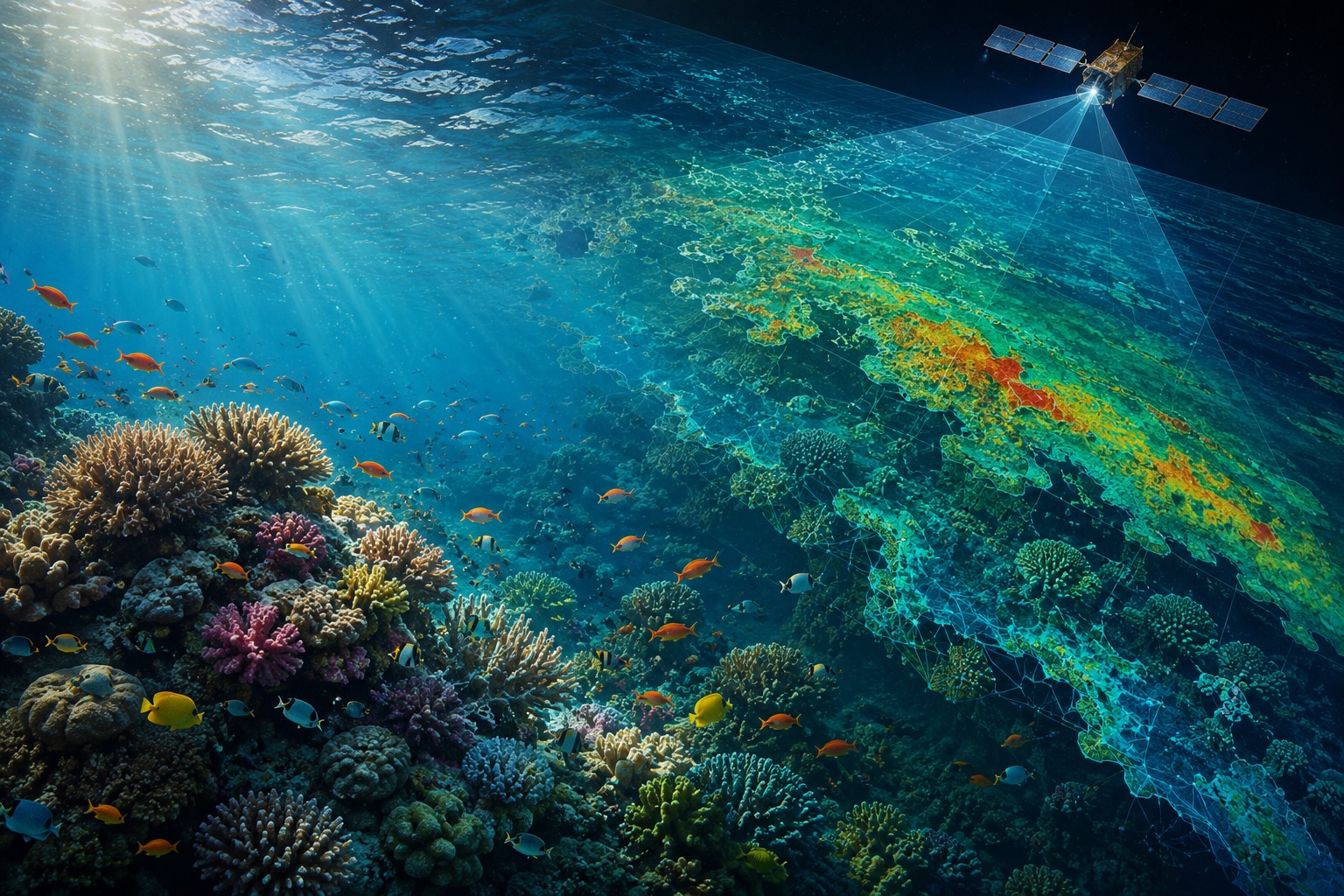
Cornell University researchers have developed an AI system that combines satellite data with underwater measurements to predict coral bleaching events earlier and more accurately.