

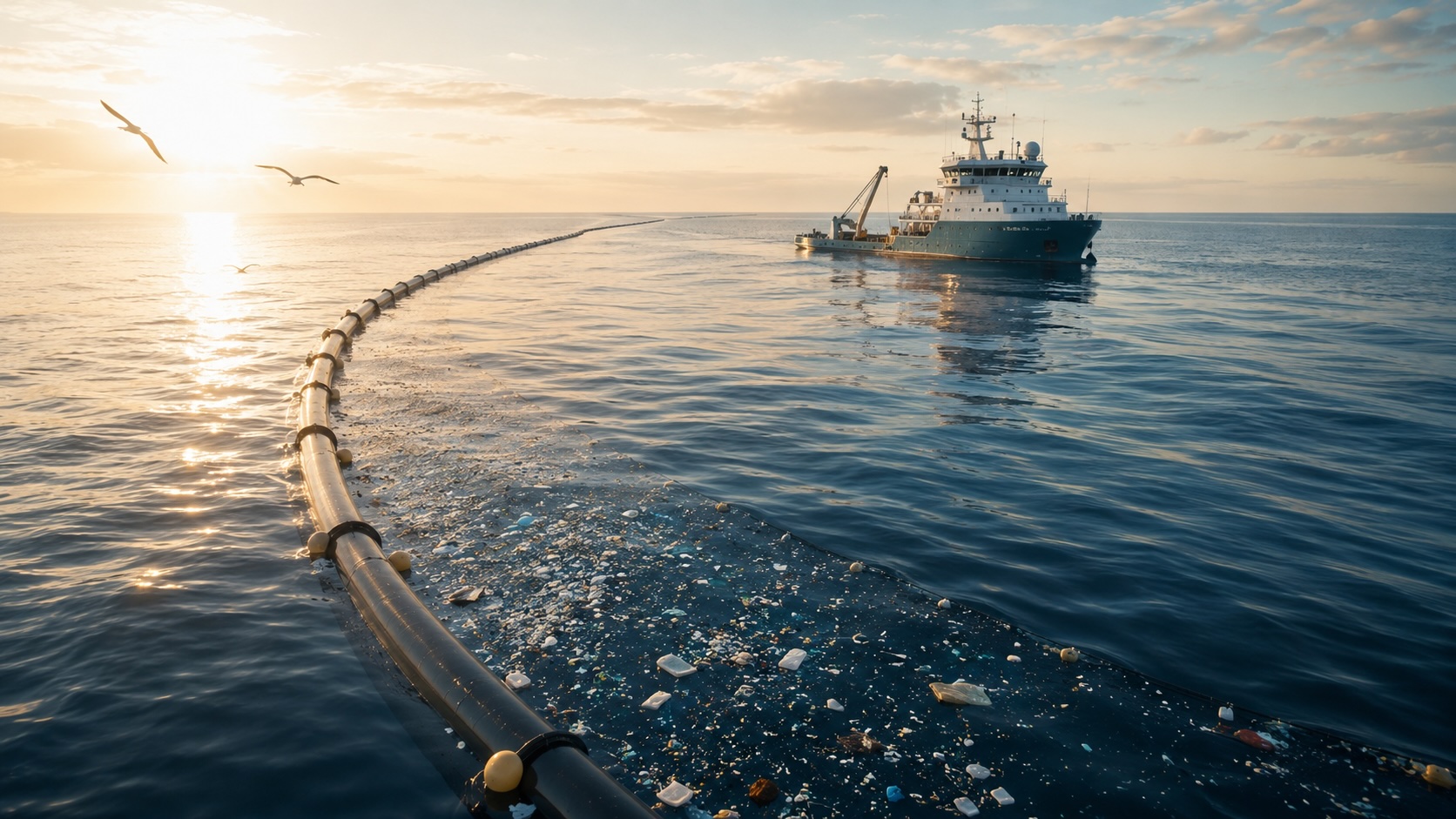
In May 2026, The Ocean Cleanup announced a breakthrough that seemed almost impossible just years ago: a 100,000-square-kilometer section of the Great Pacific Garbage Patch has been declared plastic-free. This achievement marks the first major success of System 004, a fleet of floating barriers designed to concentrate and remove marine debris using natural ocean currents.
What happened
The Ocean Cleanup, a Netherlands-based nonprofit, deployed its innovative System 004 technology across a vast area of the Pacific. Rather than chasing plastic across the ocean, the system works with ocean currents to concentrate floating debris into manageable zones. The barriers allow marine life to pass safely underneath while capturing microplastics and larger debris. Early monitoring shows that plankton levels have stabilized and microplastic concentrations in marine animals have decreased within the cleared zone.
Why it matters
The Great Pacific Garbage Patch represents one of the ocean’s most visible environmental challenges. For decades, it seemed like an insurmountable problem—a swirling mass of plastic larger than some countries. The Ocean Cleanup’s success demonstrates that large-scale ocean restoration is possible. This breakthrough offers hope not just for the Pacific, but for ocean cleanup efforts worldwide. The technology proves that innovation combined with determination can reverse some of the damage humans have caused to marine ecosystems.
What to watch next
The Ocean Cleanup plans to expand System 004 to other regions of the Great Pacific Garbage Patch and eventually to other ocean gyres. Scientists will continue monitoring ecosystem recovery in the cleared zone, tracking fish populations, plankton diversity, and microplastic levels. This data will inform future cleanup operations and help refine the technology for maximum environmental benefit.
Source: Green Living Magazine

May brings warm, sunny days to the Greek Islands without the peak summer crowds. Discover why this month offers the ideal balance for ocean lovers and travelers.
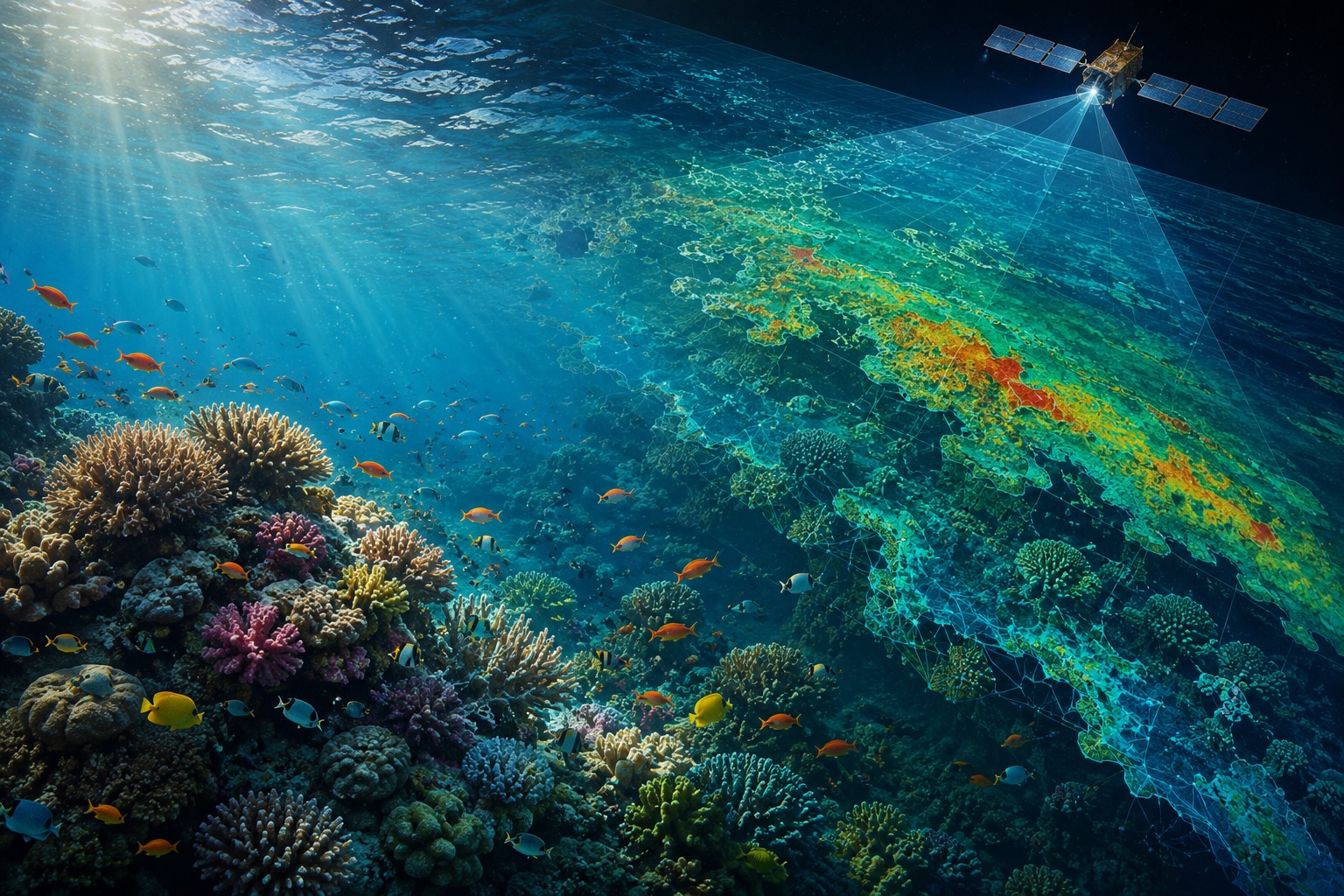
Cornell University researchers have developed an AI system that combines satellite data with underwater measurements to predict coral bleaching events earlier and more accurately.