

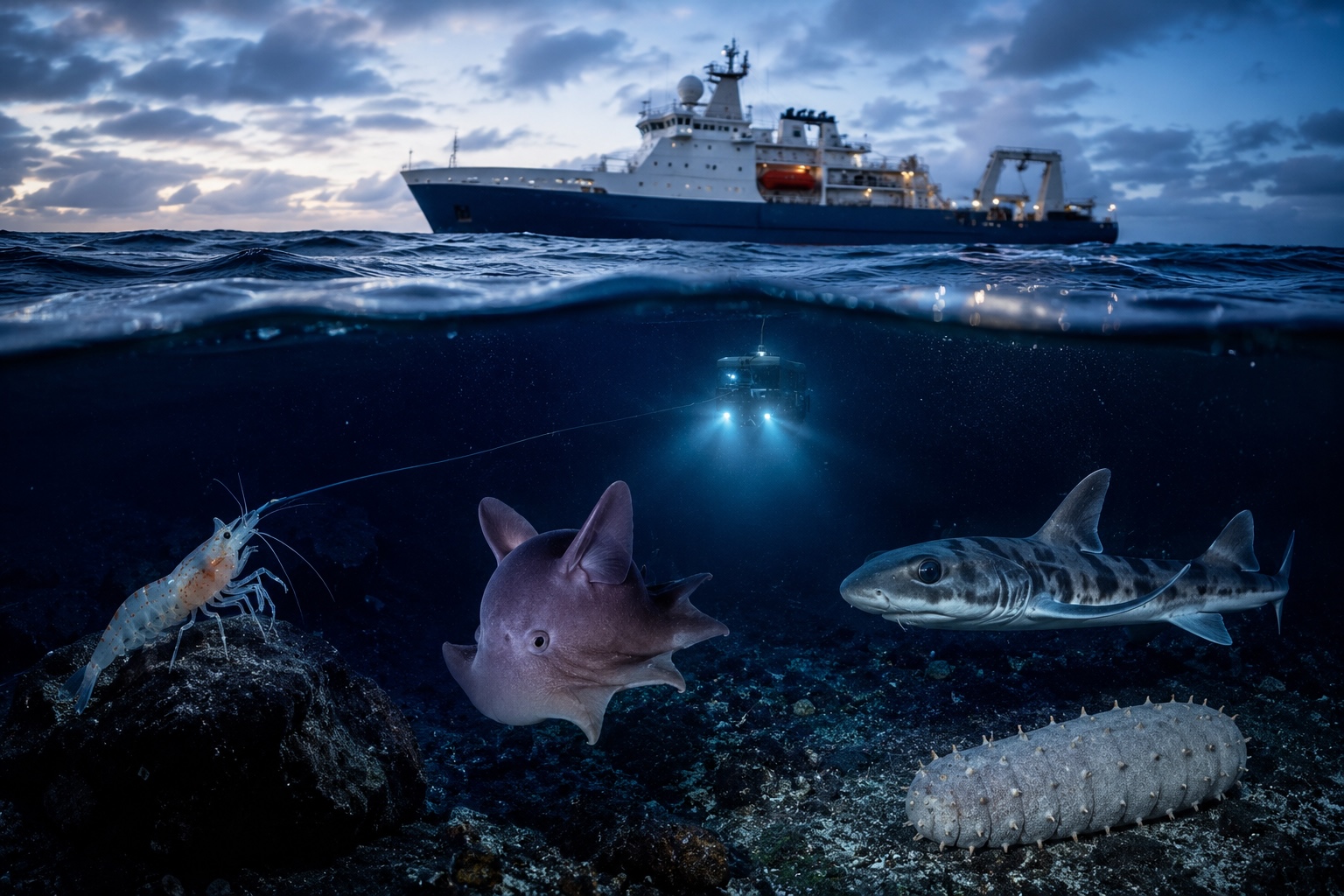
Imagine a world where much of marine life remains undiscovered. That is the reality of Australia’s oceans, where thousands of species may still be waiting in the depths. Thanks to CSIRO’s research vessel RV Investigator, scientists have described 179 species new to science in just 12 years, revealing the extraordinary biodiversity hidden beneath the waves.
Among the most memorable discoveries are creatures that capture the imagination: the Game of Thrones Shrimp, a tiny 2.5-millimeter crustacean found 4 kilometers below the surface; the Painted Hornshark, a beautifully colored deep-sea shark; and O’Loughlin’s Sea Cucumber, a soft-bodied creature with 10 pairs of legs that filters deep-sea sediments for food.
Perhaps one of the most charismatic discoveries is the Carnarvon Flapjack Octopus, a dumbo-like creature that can flatten like a pancake to hide on the seafloor.
One of the most extraordinary discoveries was entirely unexpected. During a 2017 voyage, researchers pulled a whale skull from the seafloor and found it inhabited by a new species of bone-eating worm: the Whalefall Zombie Worm. This discovery marked the first natural whale fall ever found in Australia’s deep sea, opening a new window into deep-sea ecology.
The science behind discovery
There is an important distinction between identifying and describing a new species.
Identifying means recognizing that a species has not been recorded in scientific literature. Describing involves detailed measurement, comparison and formal publication. Scientists estimate that more than 1,500 new species are still waiting to be formally described from specimens already collected by RV Investigator.
On average, new marine species can sit in collections for years before formal description, highlighting a critical global shortage of taxonomists.
How RV Investigator explores the deep
RV Investigator can map the seafloor to any ocean depth and deploy sampling equipment to depths exceeding 5,000 meters. The vessel uses specialized nets, sleds and environmental DNA samplers to detect marine life, sometimes without physically collecting it.
CSIRO is now embedding autonomous environmental DNA sampling into the vessel’s systems, allowing more continuous ocean biodiversity mapping.
Why it matters
Understanding marine biodiversity is fundamental to ocean conservation and management. These discoveries inform decisions about marine parks, fisheries management and environmental assessments.
As researchers often remind us, we cannot protect what we do not know exists. Every new species described adds to our understanding of ecosystem resilience and helps us make better decisions for ocean sustainability.
Discover more on Oceanwish and join the Ocean Drops community to follow the latest marine discoveries.

May brings warm, sunny days to the Greek Islands without the peak summer crowds. Discover why this month offers the ideal balance for ocean lovers and travelers.
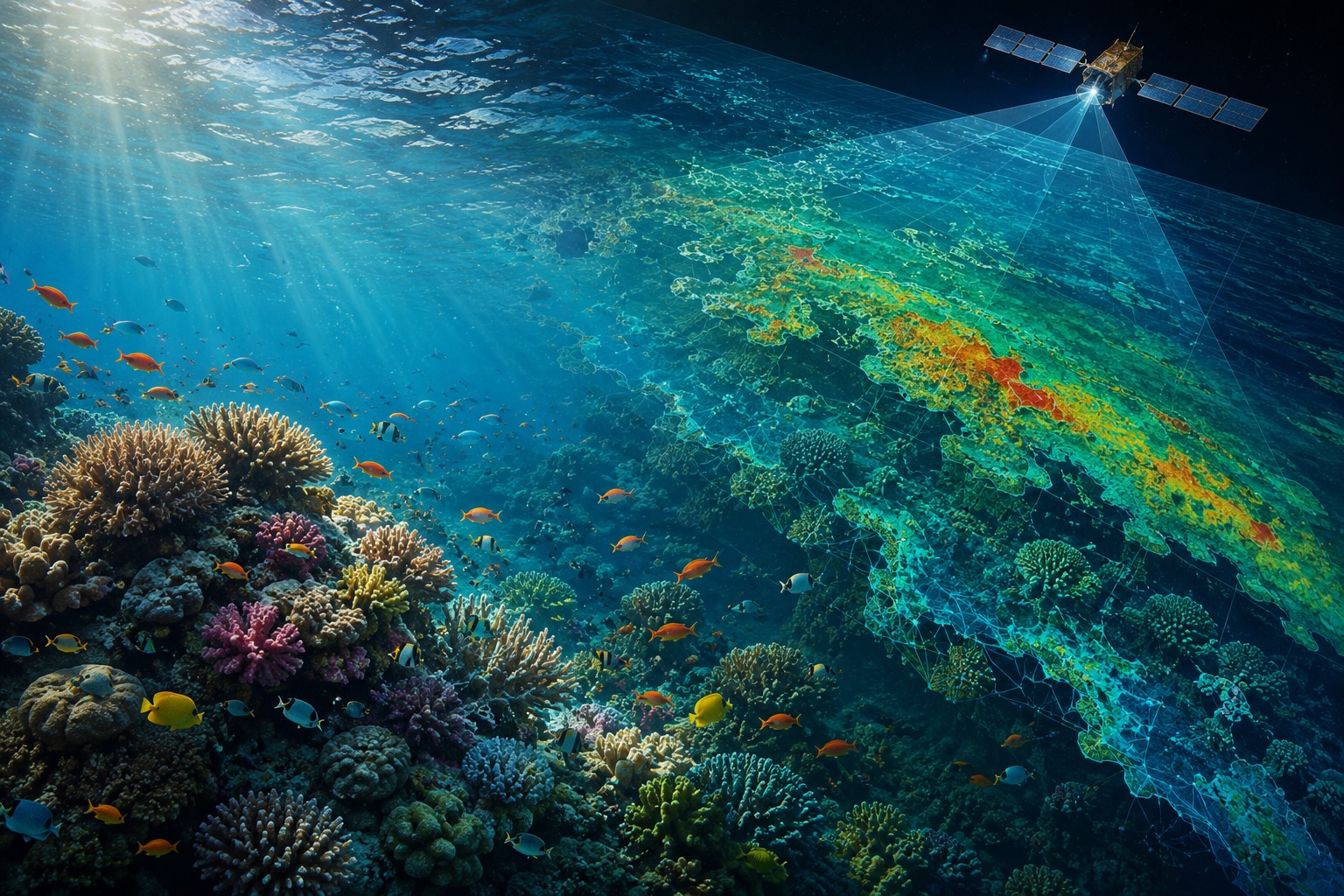
Cornell University researchers have developed an AI system that combines satellite data with underwater measurements to predict coral bleaching events earlier and more accurately.