

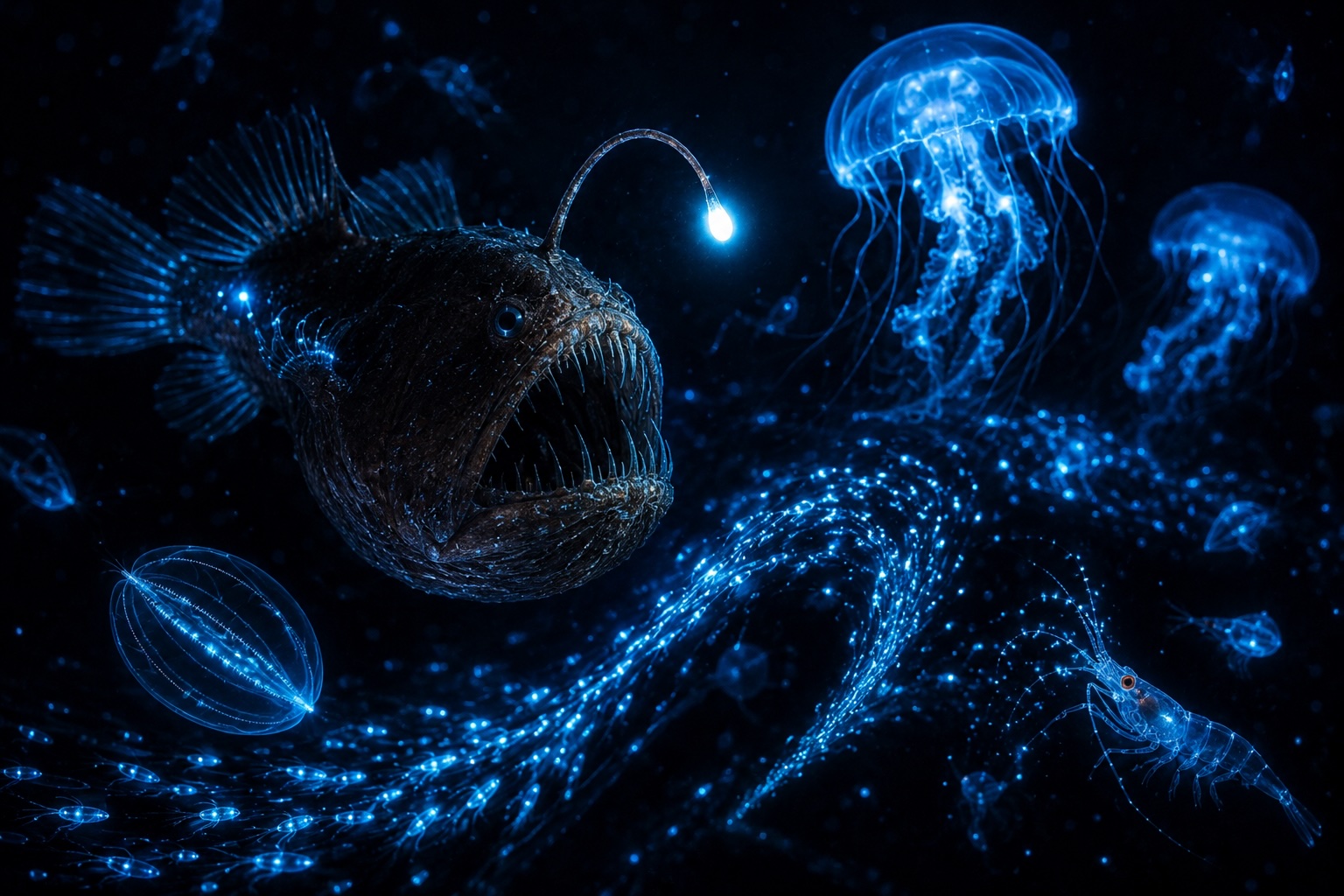
In the deepest parts of the ocean, where sunlight never reaches, an invisible light show unfolds every night. Bioluminescence—the ability of living organisms to produce light through chemical reactions—is one of nature’s most enchanting phenomena, and the ocean is its greatest stage.
Approximately 90% of deep-sea creatures produce their own light. These organisms have evolved bioluminescence for survival: to attract prey, communicate with mates, confuse predators, or simply navigate the absolute darkness of the abyss. The mechanisms vary wildly. Some creatures harbor symbiotic bacteria that glow on command. Others produce light through chemical reactions within specialized cells called photophores.
The anglerfish is perhaps the most famous bioluminescent hunter. The female dangles a glowing lure—a modified dorsal fin ray—in front of her mouth to attract prey in the pitch-black depths. When smaller fish approach the light, they become dinner. The male anglerfish, by contrast, is tiny and parasitic, fusing permanently to the female’s body to ensure reproduction in an environment where finding a mate is nearly impossible.
Jellyfish like Aequorea victoria produce green fluorescent protein (GFP), a discovery that revolutionized molecular biology and earned scientists the Nobel Prize. Researchers now use GFP to track cellular processes in living organisms, making it possible to visualize disease, monitor drug effectiveness, and understand how life works at the molecular level.
Dinoflagellates—single-celled organisms—create bioluminescent waves when disturbed, producing a blue glow that can light up entire beaches. Swimmers moving through these waters appear to trail sparks, a phenomenon that has inspired wonder and mythology for centuries.
The ocean’s bioluminescence reminds us that life finds extraordinary ways to thrive in the most extreme environments. In the darkness, creatures have learned to create their own light—a metaphor as beautiful as the science itself.

May brings warm, sunny days to the Greek Islands without the peak summer crowds. Discover why this month offers the ideal balance for ocean lovers and travelers.
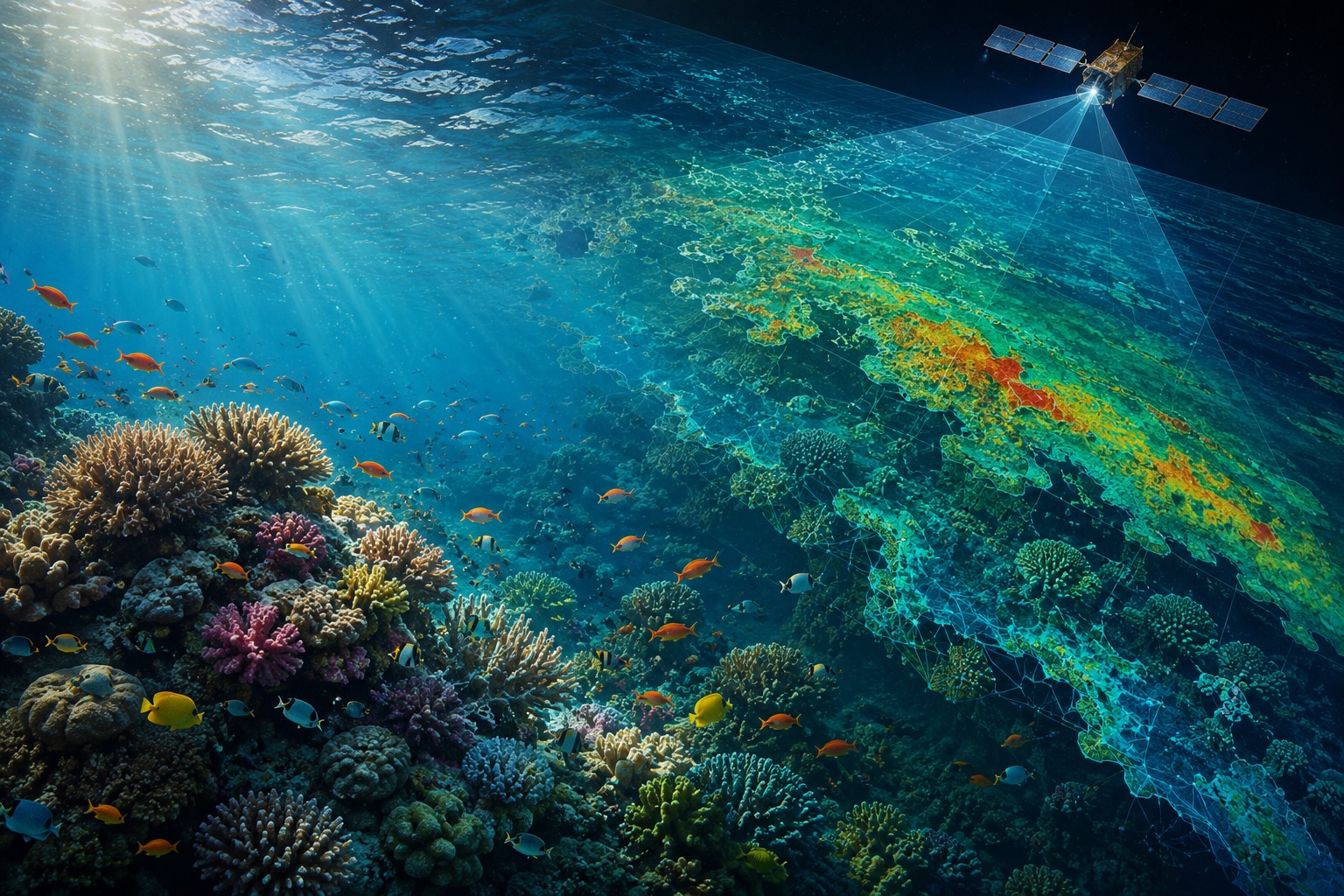
Cornell University researchers have developed an AI system that combines satellite data with underwater measurements to predict coral bleaching events earlier and more accurately.