


The ocean floor continues to surprise scientists with its incredible biodiversity. In a groundbreaking study published this week in Nature Ecology and Evolution, researchers conducting one of the largest environmental impact studies on deep-sea mining in the Clarion-Clipperton Zone (CCZ) discovered an astounding 4,350 animals and identified 788 separate species of unique crustaceans, mollusks, marine bristle worms, and other creatures.
Located between Hawaii and Mexico at depths of over 13,000 feet, the CCZ is a continent-sized abyssal plain that has become a hotspot for both scientific discovery and commercial interest due to its rich deposits of rare earth metals. The research team, led by marine biologist Thomas Dahlgren from Sweden’s University of Gothenburg, spent 160 days surveying the area before and after a deep-sea mining test.
Among the remarkable discoveries was a new species of sea spider related to land spiders but uniquely adapted to the deep-sea environment, and a new solitary coral species named Deltocyathus zoemetallicus, found attached to polymetallic nodules on the seafloor.
However, the study also revealed concerning impacts: the mining test resulted in a 37% decrease in total animal population and a 32% decrease in biodiversity within the machine’s tracks. This research provides crucial baseline data as the industry moves from exploration to potential commercial exploitation.
Travel Inspiration:
While the deep CCZ remains inaccessible to recreational divers, marine enthusiasts can explore similar deep-sea ecosystems at accessible locations like the Monterey Bay Aquarium’s deep-sea exhibits in California, or plan diving trips to volcanic underwater formations in places like the Azores, where unique deep-water species can be observed at recreational diving depths.
Source: Popular Science – Deep Sea Mining Study

May brings warm, sunny days to the Greek Islands without the peak summer crowds. Discover why this month offers the ideal balance for ocean lovers and travelers.
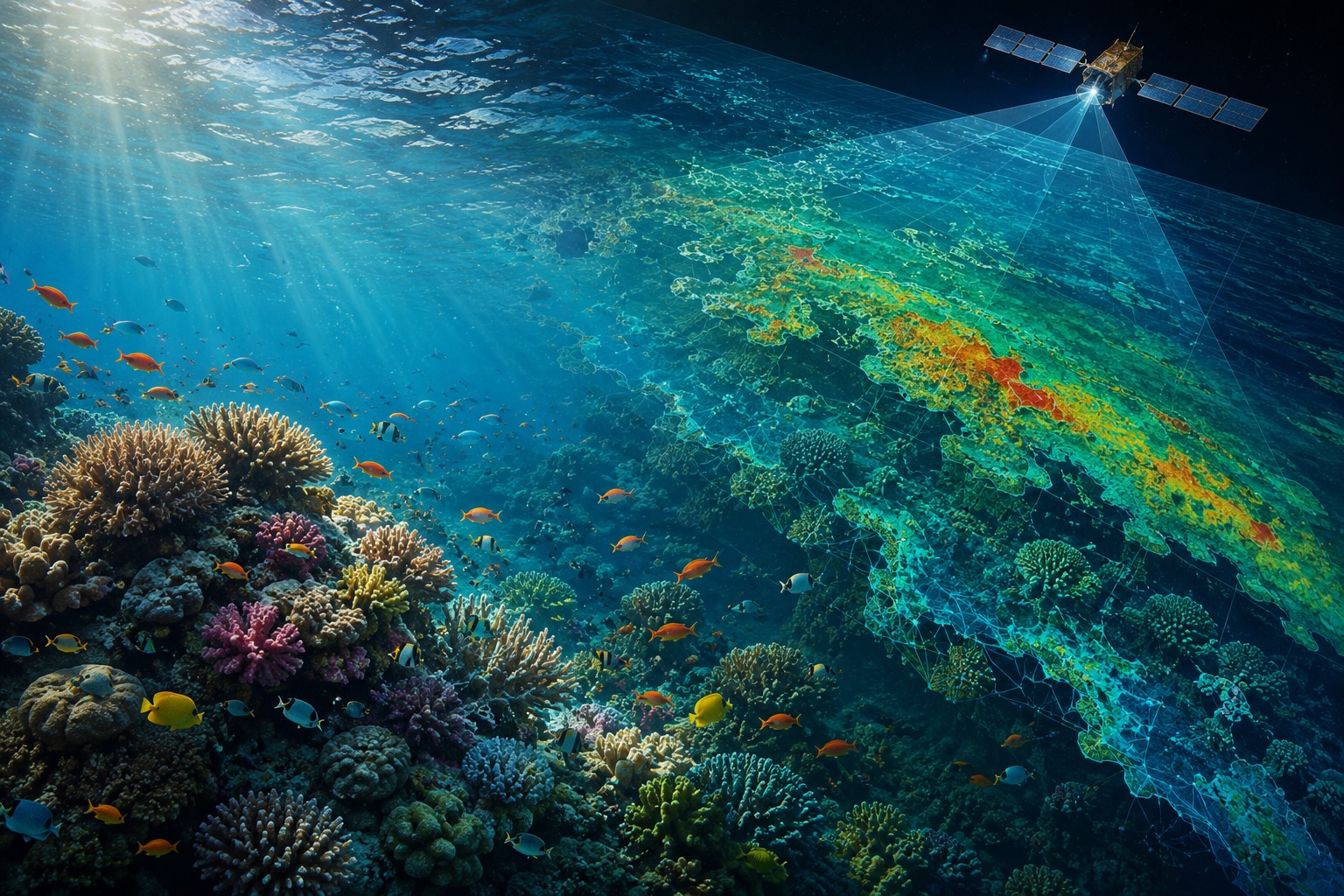
Cornell University researchers have developed an AI system that combines satellite data with underwater measurements to predict coral bleaching events earlier and more accurately.