


Overview
Warming oceans and shifting winds are measurably changing the planet’s wave climate. Multiple satellite, buoy, and model studies now show region-specific trends in wave height, period, and direction that will influence surf quality, coastal hazards, and the longevity of famous breaks.
What the data shows (in plain English)
- Waves are trending bigger in some basins (especially the Southern Ocean) as surface winds intensify; elsewhere (parts of the North Pacific/Atlantic) average heights may stagnate or decrease while swell period and direction shift due to enhanced Southern Ocean swell propagation. See Young & Ribal, Science (2019): doi:10.1126/science.aav9527.
- Extreme events are changing fastest. Observations point to rising ocean wind speeds and extremes in wave height since the 1980s, with implications for coastal flooding and erosion. (Same study above.)
- Sea level rise compounds surf-zone impacts. U.S. interagency assessments project ~10–12 inches (25–30 cm) of sea-level rise by 2050, increasing flooding frequency and altering nearshore bars and reef exposure: NOAA Technical Report (2022).
- The energy source is no mystery: the ocean has absorbed ~90% of excess planetary heat, driving marine heatwaves that can redirect storm tracks and shift wind regimes that build waves. NASA overview: climate.nasa.gov.
Why waves are changing (the physics)
Winds transfer momentum to the sea surface; changes in storm intensity, track, and persistence reshape wave fields. CMIP-forced wave ensembles consistently project multivariate changes—height, period, and direction—rather than a simple global increase. Translation: expect different outcomes by region and season, not a one-size-fits-all future. See Morim et al., Nature Climate Change (2019): s41558-019-0542-5.
What surfers will actually notice
- Period & direction shifts: More long-period swell from the Southern Ocean reaching mid-latitudes; some Northern Hemisphere storm belts produce fewer or different-angle swells. Lineups feel “different” even when size looks similar.
- Bathymetry + sea level effects: Small water-level changes alter break points, channel depths, and refraction over reefs and sandbars—changing takeoff zones and ride lengths.
- More variability: Longer calm spells punctuated by intense swell events in certain regions; elsewhere, competing wind regimes add chop or cross-sea more often.
Regional signals
- Southern Ocean source regions: Higher mean/extreme wave energy; downstream basins (SE Pacific, South Atlantic, Indian) see more long-period swell.
- North Pacific & North Atlantic: Several projections show flat or decreasing mean significant wave height, but with changing seasonality and direction. Local outcomes still depend on storm-track shifts.
Surf breaks & coastal management
Recent coastal-engineering and planning literature treats surf amenity as a climate-risk asset—worth managing like other coastal infrastructure. Sea-level rise, sediment budgets, and wave-climate shifts can degrade or, in rare cases, improve break quality. Break-specific monitoring and protection (e.g., moorings instead of anchoring on reefs; sediment management near river mouths) are part of best practice.
Practical tips (for surfers & coastal communities)
- Track the signal, not just the size: Follow regional wave-climate dashboards and ensemble outlooks (e.g., USGS Coastal Change Hazards/CoSMoS: USGS Portal).
- Plan for water levels: Factor king tides and SLR into spot choice; the same swell will break differently at +20 cm.
- Support data & stewardship: Back reef-safe moorings and citizen-science (photo/time-series of bars/reefs) to document change.
- Heat-aware seasons: Marine heatwaves can reshape storm/wind patterns—use seasonal outlooks and update travel windows accordingly.
Where to watch the changes (responsibly)
- SE Pacific / Southern Hemisphere points: Ideal classrooms for long-period swell behavior from a strengthening Southern Ocean source.
- Low-slope beach systems near SLR hotspots (U.S. Atlantic/Gulf): Observe how modest sea-level increments shift bar geometry and nearshore breaking.
Bottom line
“Climate change” for surfing isn’t abstract: it’s wind + water level + storm tracks, and the signal is already detectable. With local etiquette and evidence-based planning, the surf community can adapt while advocating for emissions cuts and coastal protection.
Further reading
- Young & Ribal (2019), Science — global wind/wave trends: paper
- Morim et al. (2019), Nature Climate Change — multivariate wave projections: paper
- NOAA Sea-Level Rise Technical Report (2022): PDF
- USGS Coastal Change Hazards Portal: dataset hub
- NASA climate/ocean heat overview: climate.nasa.gov

May brings warm, sunny days to the Greek Islands without the peak summer crowds. Discover why this month offers the ideal balance for ocean lovers and travelers.
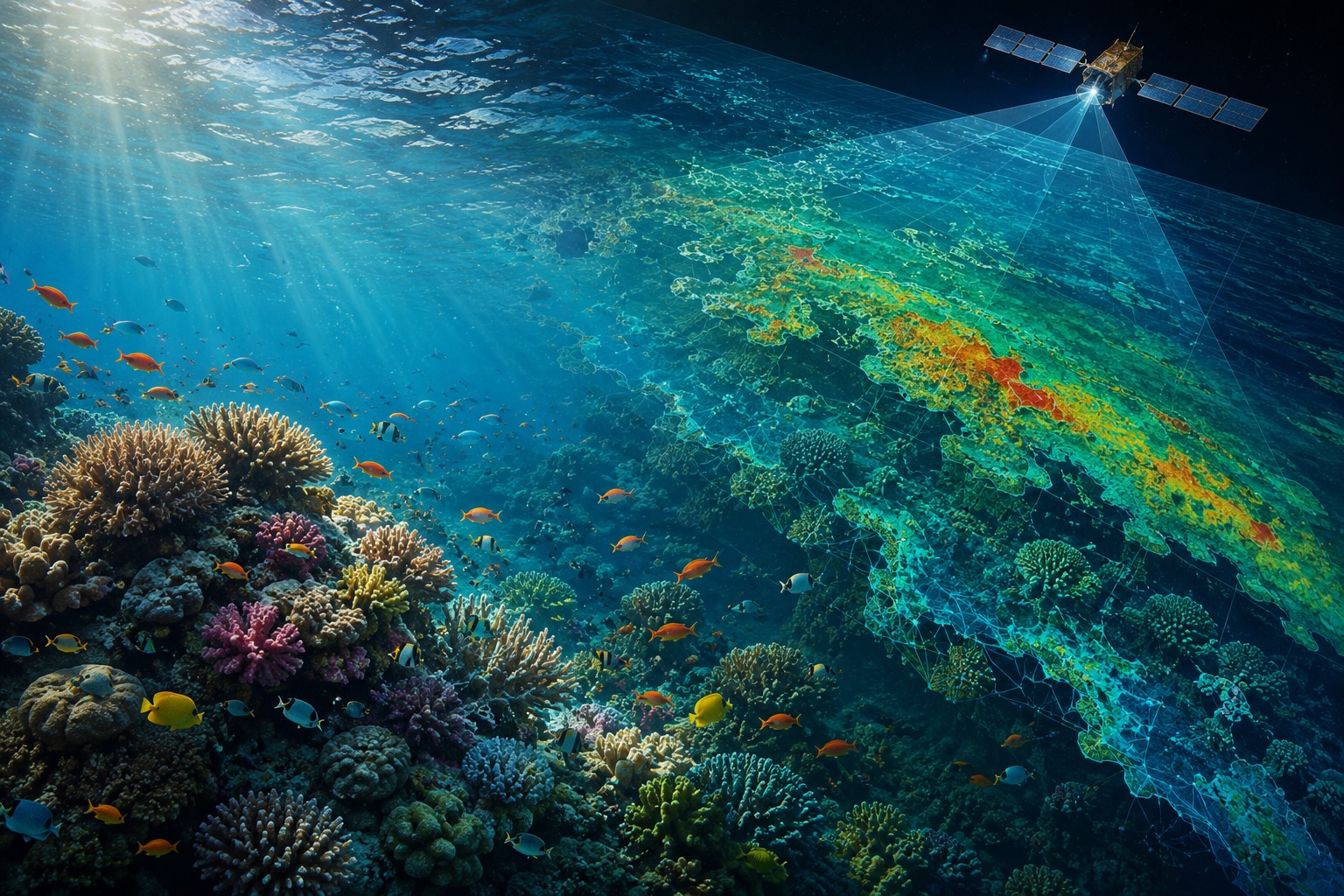
Cornell University researchers have developed an AI system that combines satellite data with underwater measurements to predict coral bleaching events earlier and more accurately.